Champions With Heart.

17-year-old Bicycle Accident Victim with Soft Tissue Injuries Settles Personal Injury Claims for $2.95 Million

In late 2017, Jane*, a 17-year-old Grade 12 high school student was struck by a motor vehicle while she was crossing the street on her bicycle. She was on her way home from the park after hanging out with her friends. She was initially noted as only sustaining soft tissue injuries to her arms and legs.

Read More about 17-year-old Bicycle Accident Victim with Soft Tissue Injuries Settles Personal Injury Claims for $2.95 Million

DUI: Stats, Ontario Law, and Impacts of Charges

Impaired driving, also called driving under the influence or DUI, refers to the operation of a vehicle while the driver’s ability to do so is compromised by alcohol, prescription or non-prescription drugs, alone or in any combination. Types of vehicles where DUI charges could apply include not only road-going vehicles, but also off-road vehicles and ATVs, motorcycles, boats, and snowmobiles. While as a society we are doing a better job of exercising appropriate judgement when it comes to driving under the influence, DUIs remain the second leading criminal cause of death in Canada after homicide and the second most common criminal offence processed in Canadian courts.

Read More about DUI: Stats, Ontario Law, and Impacts of Charges

Campisi’s Nathan Tischler Quoted in Canadian Underwriter Magazine

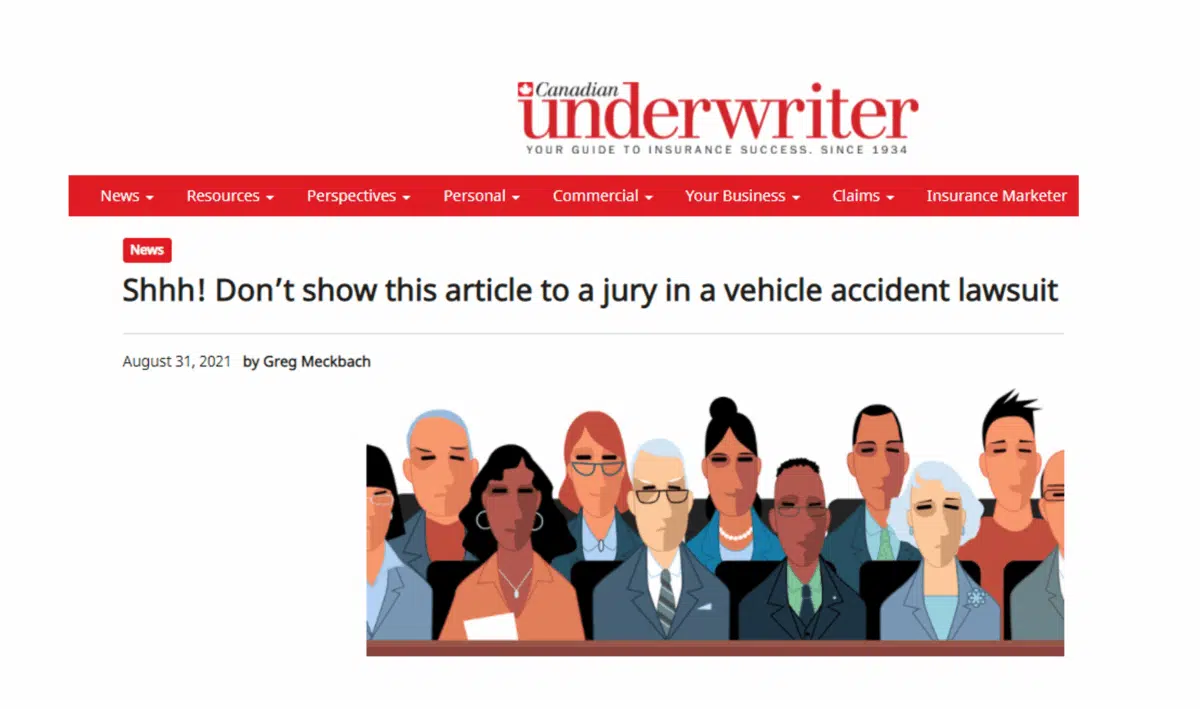
In the August 31st, 2021 article, “Shhh! Don’t show this article to a jury in a vehicle accident lawsuit“, insurance industry magazine Canadian Underwriter cites the expert opinion of Campisi lawyer Nathan Tischler in a story about motor vehicle accident tort claims. In the context of a recent lawsuit, writer Greg Meckbach highlights this fact to which jury members are often oblivious: that a statutory deductible of almost $40,000 exists for pain and suffering in these cases. 

Read More about Campisi’s Nathan Tischler Quoted in Canadian Underwriter Magazine

Depression and Injury: How to Cope

Frequently, people who have been injured in a collision or other traumatic event will develop depression – especially if the injuries result in chronic pain, brain injury or catastrophic impairment.  Having to face the sudden loss of good health and cope with an injury severe enough to render the person dependent on others for support can result in feelings of inadequacy and helplessness.  Often, there are chemical and hormonal changes in response to injury that produce depression and anxiety.

Read More about Depression and Injury: How to Cope