Champions With Heart.

Representing Yourself in a No-Fault Insurance Claim? You Need to Know This.

If you or a loved one is injured in an automobile accident, life can get turned upside down in a heartbeat. All you want is to receive the treatment and support you need to return to normal life and put the incident behind you. It can be tempting to try to simplify the process of recovery by dealing with everything yourself instead of hiring legal professionals to handle your case. This option can be the quickest and can seem like the most efficient approach.

Read More about Representing Yourself in a No-Fault Insurance Claim? You Need to Know This.

DUI: Stats, Ontario Law, and Impacts of Charges

Impaired driving, also called driving under the influence or DUI, refers to the operation of a vehicle while the driver’s ability to do so is compromised by alcohol, prescription or non-prescription drugs, alone or in any combination. Types of vehicles where DUI charges could apply include not only road-going vehicles, but also off-road vehicles and ATVs, motorcycles, boats, and snowmobiles. While as a society we are doing a better job of exercising appropriate judgement when it comes to driving under the influence, DUIs remain the second leading criminal cause of death in Canada after homicide and the second most common criminal offence processed in Canadian courts.

Read More about DUI: Stats, Ontario Law, and Impacts of Charges

Campisi’s Nathan Tischler Quoted in Canadian Underwriter Magazine

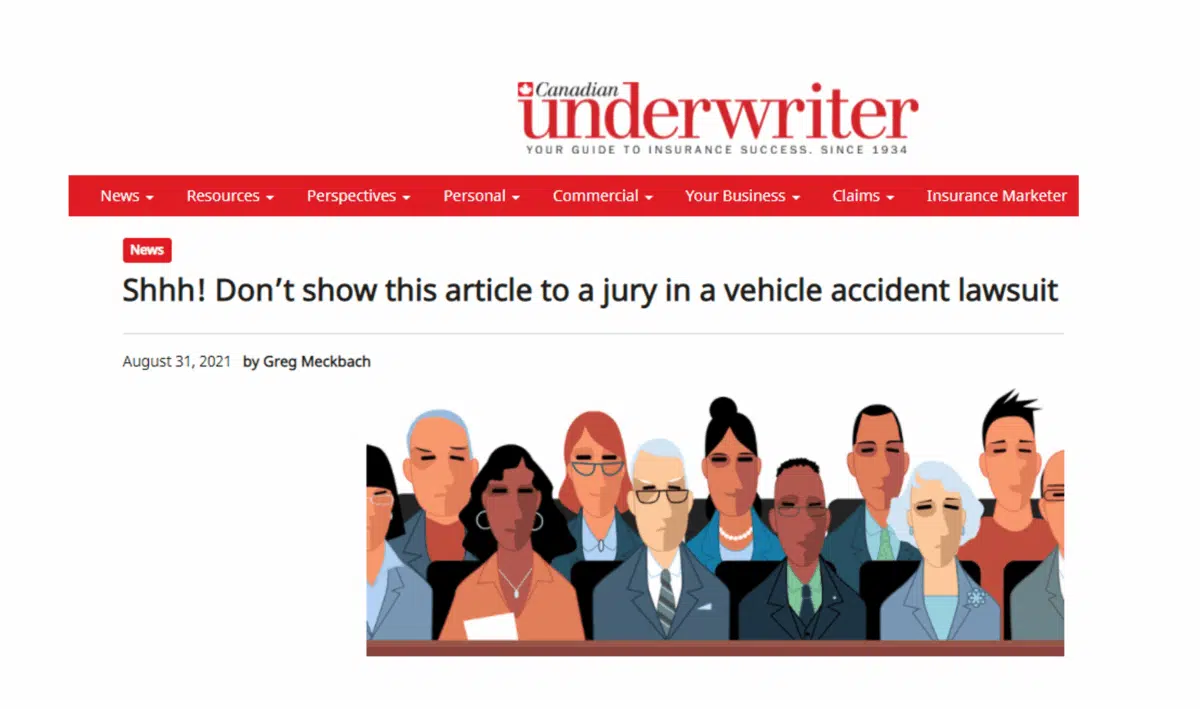
In the August 31st, 2021 article, “Shhh! Don’t show this article to a jury in a vehicle accident lawsuit“, insurance industry magazine Canadian Underwriter cites the expert opinion of Campisi lawyer Nathan Tischler in a story about motor vehicle accident tort claims. In the context of a recent lawsuit, writer Greg Meckbach highlights this fact to which jury members are often oblivious: that a statutory deductible of almost $40,000 exists for pain and suffering in these cases. 

Read More about Campisi’s Nathan Tischler Quoted in Canadian Underwriter Magazine

An Overview On Threshold And Its Importance

One of the trade-offs the insurance industry negotiated before it accepted the “no-fault” accident benefits scheme was a limitation on accident victims’ right to sue for pain and suffering and health care damages.  In order to succeed as a plaintiff, you must prove on the balance of probabilities (“more likely than not”) that you have suffered a permanent, serious impairment of an important physical, mental or psychological function.  Less often, you can demonstrate a permanent serious disfigurement.  This limitation is known as the “threshold” and is used routinely by insurance defence lawyers to pressure plaintiffs, and particularly those of you suffering from chronic pain conditions or mild traumatic brain injuries, into settling for less than your cases are worth.   They will claim that there is no objective evidence that you meet the threshold. As a result, a judge will not allow any award for pain and suffering or health care at trial. And, they will claim, you will end up with nothing or even owing the defendant money for legal costs.

Read More about An Overview On Threshold And Its Importance