
Champions With Heart.

Electric Scooter Accident: $1.1M Settlement Despite Being At Fault | Ontario

David’s case seemed impossible from the start. Uninsured scooter. Running a red light. Never checking for oncoming traffic. The case’s prospects looked bleak, if they existed at all.

David faced what appeared to be an unwinnable situation after a serious electric scooter collision. But Campisi Law’s e-scooter accident lawyers saw beyond the challenges and secured a $1.1 million recovery, proving that even the most complex liability scenarios can yield substantial results.

The Electric Scooter Collision That Changed Everything

In a split second, David’s scooter ride home became a complex legal challenge. David failed to check for oncoming traffic as he entered the road during a red light, riding his uninsured electric scooter without a helmet. As he went through the intersection, a city bus struck him and caused a brain injury. David faced weeks of hospitalization and rehabilitation that would test his fortitude.

Initial Assessment: An Impossible Case

David’s situation initially appeared legally hopeless:

  • Significant fault attribution for running the red light and failing to check traffic
  • Uninsured electric scooter creating coverage and right to sue complications
  • Safety protocol violations including riding without a helmet

Many firms would have walked away.

The conventional wisdom suggested this case had no viable path to meaningful compensation.

David knew the legal challenges were overwhelming.

That’s when he came to Campisi Injury Lawyers.

Campisi Law: Finding Solutions Where Others See Dead Ends

When David engaged our services, we refused to accept that fault attribution meant zero recovery. Instead, we applied our deep understanding of electric scooter regulations in Ontario. We conducted an exhaustive analysis of his case and explored angles others had dismissed.

Our comprehensive investigation revealed:

Electric Scooter Law Expertise: We applied our deep understanding of electric scooter regulations to build a compelling legal argument regarding insurance requirements, successfully repositioning the fundamental legal framework of David’s case.

Bus Company Liability Investigation: Rather than focusing solely on David’s actions, we conducted a thorough investigation into the bus company’s operations and uncovered critical liability factors that other assessments had overlooked.

Comprehensive Impact Documentation: We documented both David’s physical trauma and the significant psychological effects of the accident. Despite his excellent pre-accident physical condition, the psychological impact complicated his recovery in ways that demanded full recognition and compensation.

The Settlement That Defied All Odds

Final Settlement: $1.1 Million

This extraordinary result included:

  • Full recognition of the bus company’s responsibility
  • Medical expenses for traumatic brain injury treatment and ongoing care
  • Income replacement covering David’s lost earning capacity
  • Pain and suffering compensation for physical trauma and psychological impact
  • Future care costs addressing long-term recovery needs
  • $1.1 million in compensation despite major fault attribution

Your “Impossible” Case Deserves Expert Analysis

Personal injury cases with complex liability often appear hopeless until the right legal team applies specialized knowledge and relentless investigation. Fault attribution doesn’t always mean zero recovery when you have advocates who refuse to accept conventional limitations.

At Campisi, we approach every case, even the most challenging, with the understanding that legal solutions exist beyond surface-level assessments. We investigate exhaustively, leverage specialized expertise, and fight relentlessly for compensation our clients deserve.

If everyone tells you that you don’t have a case, we want to hear from you. We can’t promise specific outcomes, but we can promise that we’ll explore every possible avenue and fight for every dollar of compensation available.

Your case might be complicated. That’s exactly what we do.
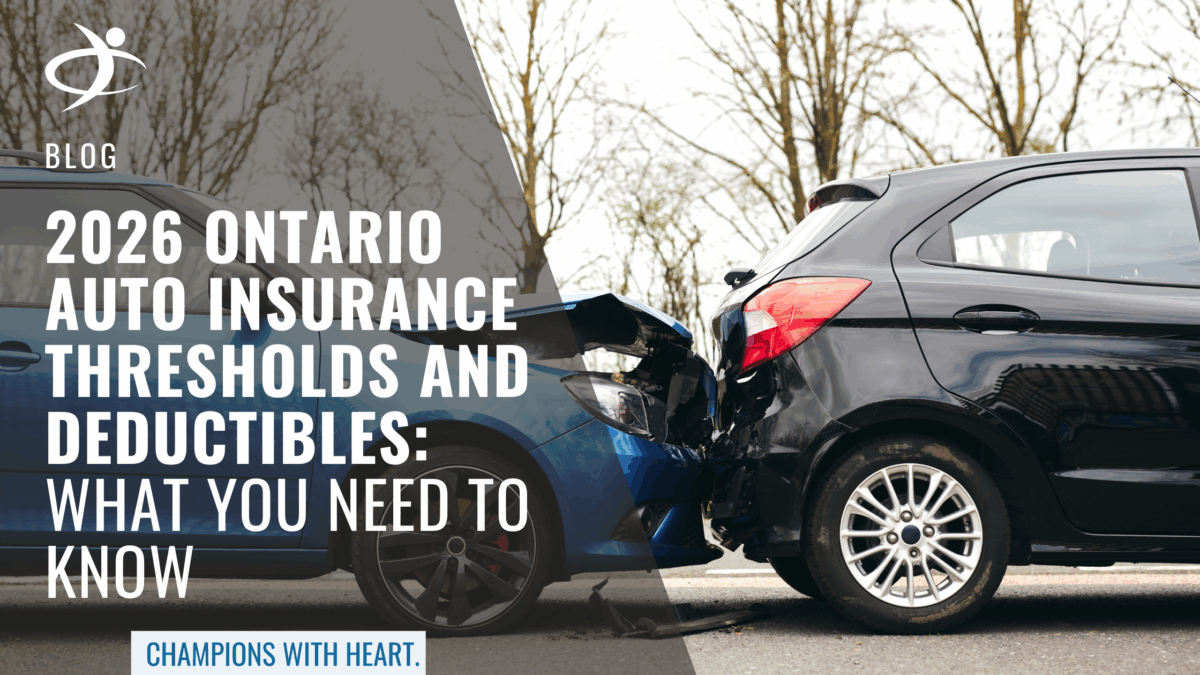
2026 Ontario Auto Insurance Thresholds and Deductibles: What You Need to Know

Understanding how statutory thresholds impact your pain and suffering compensation 

Recently, the Financial Services Regulatory Authority of Ontario (FSRA) published its 2026 Automobile Insurance Indexation Amounts Guidance. This Guidance, effective January 1, 2026, establishes the amounts related to insurance claims that are subject to indexation for 2026. Indexation is tied to the Canadian Consumer Price Index (CPI) and varies year to year. 

The FSRA Guidance impacts the statutory threshold and deductible for determining “non-pecuniary” tort awards arising from the use or operation of an automobile. Such awards are usually referred to as “general” damages and are intended to compensate a collision victim for pain and suffering, loss of amenities and loss of enjoyment of life. Damages awards below the threshold amount (for 2026, this amount is $159,708.71) will be subject to a deductible. A similar threshold and deductible are applied to successful claims by family members for loss of care, companionship, and guidance under the Family Law Act (FLA). 

What Does This Mean for You? You Could Win Your Case and Receive Zero Compensation for Pain and Suffering 

The government created these thresholds with the stated goal of controlling insurance costs and reducing what they called “minor” injury claims. In theory, the idea was to keep smaller claims out of court so insurance premiums wouldn’t keep rising. 

In reality, these rules create a serious trap for injury victims. Here’s the problem: many legitimate, life-altering injuries result in general damage awards that fall below the $159,708.71 threshold. When that happens, a massive deductible gets applied and in some cases, you could win your case but walk away with nothing for your pain and suffering. 

This system essentially tells injured people: unless your pain and suffering is valued at over $159,708.71, you’ll lose a significant portion of what a jury thinks you deserve or potentially all of it. It doesn’t matter how much your injury has impacted your daily life, your ability to work, or your quality of life. If the number falls below the threshold, the insurance company gets to keep tens of thousands of dollars that a jury awarded to you. 

Who Benefits? Who Loses? 

The insurance industry benefits enormously from these thresholds. They act as a built-in discount on jury awards, allowing insurers to avoid paying full compensation even when a jury has determined an injury victim deserves it. 

Everyday people lose. The thresholds discourage many legitimate claims from ever being pursued because victims and their lawyers know that even a successful trial could result in zero compensation. Meanwhile, insurance companies continue to profit while injured people struggle with ongoing pain, lost wages, and medical expenses. 

The statutory thresholds were created to control the rising cost of personal injury litigation. In practice, they act as a deterrent to many serious personal injury claims and offer a windfall to the insurance companies. Without knowing it, if a jury awards a plaintiff or family member less than the threshold amount for a given year, that award is automatically subject to the applicable deductible amount. This means that a successful claimant could receive ZERO compensation for pain and suffering, or at least be disentitled to a significant portion of their damages on the merits of the case. 

General damages that do not meet the threshold will be subject to a $47,913.01 deductible in 2026, up from $46,790.05 in 2025. FLA damages that do not meet the threshold will be subject to a $23,956.52 deductible, up from $23,395.04 in 2025. 

Example 1: The plaintiff suffered a fractured right wrist and soft-tissue injuries to his lower back, right knee and hip. His back pain resolved after several months of physiotherapy. At trial it was determined that the ongoing right knee and hip impairment was from a pre-existing condition, not a collision-related injury. After the fracture healed, the plaintiff continued to suffer from wrist pain with mild deformity and reduced grip and pinch strength. 

At trial in 2025, the jury found that the plaintiff had suffered a permanent and serious injury to his wrist and awarded $35,000.00 for pain and suffering. However, since the award was lower than the threshold for 2025, and the deductible at that time was $46,790.05, the plaintiff received nothing for pain and suffering. 

Example 2: The plaintiff suffered from chronic neck and shoulder pain with a “frozen” right shoulder, severe daily headaches, depression and anxiety. Despite ongoing treatment, her condition did not improve, and she could not return to work. 

At trial in 2025, the jury accepted that the plaintiff’s chronic pain had impacted every aspect of her life and awarded $140,000.00 for pain and suffering. However, since the award was lower than the threshold of $155,965.54, a deductible of $46,790.05 was applied, reducing her pain and suffering compensation to $93,209.95. 

If you have been seriously injured in a car accident and have questions or concerns about your legal rights, we are pleased to offer a free consultation

Put the experts to work for you. Campisi Injury Lawyers, Champions with Heart!