
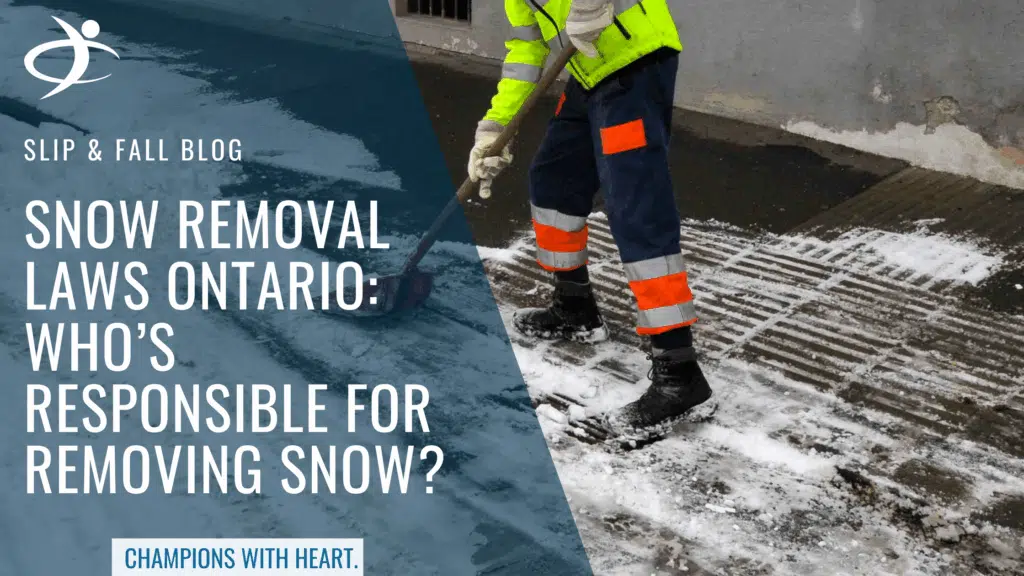
Winter in Ontario means more than beautiful snowfall; it brings obligations. Under Ontario’s laws and municipal bylaws, snow and ice removal is both a good practice and often a legal requirement. This article explores snow removal laws in Ontario, clarifies who must clear snow from sidewalks, driveways, and properties (homeowners, landlords or tenants), and explains why it matters for safety, liability and your peace of mind.
Legal Responsibilities for Homeowners Clearing Snow
Homeowners in Ontario, whether living in a detached house, a townhouse, or small building, have responsibilities for snow and ice removal.
- In many municipalities, local bylaws require property owners to clear adjacent sidewalks within a specified timeframe after snowfall.
- Homeowners must also ensure driveways, stairs, walkways, and entrances remain free of hazardous accumulations of snow or ice. Failing to do so could create liability and make you responsible if someone slips and falls.
- While laws vary by municipality, the guiding principle remains: property owners must take reasonable steps to keep their property (and adjacent sidewalks when required) clear and safe during winter.
If you own a home, ensure you remove snow in a timely manner. If you’re a homeowner in a municipality with a sidewalk clearing bylaw, don’t forget the sidewalk.
Who Is Responsible for Snow Removal at a Rental Property?
When a property is rented, whether it’s a single-family home, duplex, townhouse or multi-unit building, the picture can become more complex. Responsibilities can vary based on lease terms, property type, and local laws.
The primary law governing this in Ontario is the Residential Tenancies Act, 2006 (the “RTA”). Under this law, landlords are required to maintain the rental property in good repair and ensure it is fit for habitation. Specifically, Section 20(1) of the RTA states:
“A landlord is responsible for providing and maintaining a residential complex, including the rental units in it, in a good state of repair and fit for habitation and for complying with health, safety, housing and maintenance standards:
That duty extends beyond the interior. It includes exterior walkways, driveways, entrances and other shared or common areas.
Because of this duty, even if a lease appears to assign snow shoveling to a tenant, such clauses may be unenforceable, at least with respect to common areas. Courts have found that the owner’s maintenance obligation under the RTA cannot be signed away in a standard lease.That said, there are situations where a tenant can have snow removal responsibilities, but only under specific conditions:
Is The Landlord Responsible for Snow Removal?
- For multi-unit buildings (apartments, condos, duplexes, etc.), and for common areas (driveways, parking lots, shared walkways, building entrances, stairwells), the landlord remains responsible for snow and ice removal.
- The landlord must clear snow and keep walkways safe. If they fail to do so and someone is injured, the landlord may be held liable.
- If the lease tries to shift this burden onto tenants, the clause is often unenforceable. In many cases, courts will disregard it if it conflicts with the RTA’s maintenance obligations.
Are Tenants Responsible for Snow Removal?
Tenants may be responsible for snow removal only in limited, clearly defined circumstances:
- If a tenant rents a single-family home or a unit with exclusive, private walkways, driveway, or backyard/patio, and the lease includes a separate, written agreement assigning snow removal (ideally framed as a contract for services), the tenant may lawfully take on snow removal duties.
- The agreement must provide appropriate consideration (for example, a rent reduction or separate payment) in return for snow shoveling services.
- Even when tenants agree to snow removal, landlords should periodically inspect to ensure the work is done properly. Failure to supervise might still lead to liability if hazards remain.
- Snow or ice on balconies, patios, or designated parking spots (if those are covered by the tenant’s exclusive use) are examples of areas where a tenant might reasonably take responsibility.
In short, unless there is a proper separate agreement and the area is exclusively the tenant’s to control, responsibility generally remains with the landlord.
Who Is Responsible for Clearing Snow from Sidewalks?
Sidewalks adjacent to properties add another layer of complexity. Responsibility often depends on municipal bylaws rather than just the RTA, and those bylaws vary across Ontario municipalities.
- Many municipalities require property owners (homeowners or landlords) to clear any sidewalk directly in front of, alongside or behind their building within a set timeframe after snowfall.
- Failure to comply can result in fines or the municipality stepping in and later billing the property owner.
- If a property owner fails to clear their sidewalk or inadvertently creates additional hazards (for instance, improper drainage or ice from downspouts freezing onto the sidewalk), they may face liability if someone slips and falls.
For homeowners and landlords, compliance with municipal sidewalk bylaws is as important as complying with provincial standards under the RTA.
Case Law and Legal Precedents
The landmark case Montgomery v. Van (2009 ONCA 808) remains the most cited precedent on this issue. In that case:
- The lease required the tenant to keep the walkway and stairs free of snow and ice.
- The tenant slipped and was injured. The court held that, despite the lease clause, the landlord remained liable because the duty to maintain safe premises cannot be waived by a standard lease clause.
- The court explained that for a tenant to lawfully assume snow removal duties, the agreement must be a separate contract for services, not just a clause in a standard tenancy agreement.
This precedent has shaped how landlords and tenants approach snow and ice removal in Ontario rentals, especially for shared or common areas.
Practical Steps for Homeowners, Landlords & Tenants to Minimize Risk
Whether you own your property or rent, and whether you are a homeowner, landlord or tenant, winter snow brings real risk. Here are practical steps to minimize liability, avoid fines, and keep everyone safe.
- Know the local bylaws. Municipal snow removal bylaws vary across Ontario. Check your local bylaws for sidewalk-clearing deadlines and whether responsibility lies with the property owner or the municipality.
- Review (or draft) your lease carefully. If you are a landlord and want to assign snow shoveling to a tenant, consider drafting a separate contract for services. Include clear terms: which areas, what services, when, and what compensation is offered.
- Maintain documentation. Record all snow removal efforts, including date, time, areas cleared, weather conditions, and photos. This can be vital evidence if someone slips, falls, or if a municipality complains.
- Communicate with tenants proactively. Whether you hire a snow removal company, assign duties to a tenant, or handle the work yourself, let tenants know the plan in advance of the snow season.
- Address icy hazards beyond just snow. Clearing snow may not be enough. Ice buildup, freezing rain, or downspouts that funnel water onto sidewalks can all lead to slippery surfaces.
- Consider professional snow removal services. For landlords or homeowners with multiple properties, or for those unable to shovel safely, hiring a snow removal service can reduce risk and ensure compliance.
Final Thoughts on Snow Removal Laws in Ontario
Winter in Ontario brings many joys: fresh snow, cozy evenings, and winter sports. But it also brings legal obligations. Snow removal laws in Ontario are not just a concern for lawyers. They affect homeowners, landlords, tenants, and municipalities alike.
The duty to clear snow and ice is grounded in both provincial law (through the RTA) and municipal bylaws (for sidewalk clearing). For rental properties, the default responsibility lies with the landlord, especially for common areas. While tenants can sometimes assume snow removal duties, this requires a separate, properly drafted agreement.
At Campisi Law, we understand how dangerous slips and falls can be, especially for vulnerable individuals. We encourage all homeowners, landlords, and tenants to take snow and ice removal seriously. If you or a loved one has suffered an injury due to unsafe snow or ice conditions, whether at a rental property or private home, you may have grounds to seek legal advice and hold the responsible party accountable.
If you would like our help or want to understand your rights under the law, we are here for you.
